Outside the FDA's Reach: The Safety Risks Hiding Inside Compounded Medications

A Custom Solution With an Uncharted Safety Profile
For most patients, the prescription process follows a familiar path: a licensed prescriber writes an order, a pharmacist dispenses a commercially manufactured product, and the medication arrives with an FDA-approved label detailing its composition, dosage, and documented side effects. That framework, however, does not apply to every medication dispensed in the United States.
Compounded pharmaceuticals occupy a fundamentally different regulatory space. These are preparations mixed, altered, or assembled by a pharmacist to meet a specific patient's needs—a lower concentration for a pediatric patient, a topical formulation for someone who cannot tolerate oral medications, or a reformulated version of a drug that has been discontinued from commercial production. In each of these scenarios, the finished product has not undergone the same premarket review, clinical testing, or manufacturing quality standards that govern FDA-approved drugs.
For patients who genuinely require a compounded formulation, this arrangement may represent the only viable clinical option. But the safety implications of bypassing conventional oversight deserve careful examination.
What Compounding Pharmacies Do—and What They Don't Have to Prove
Under current federal law, compounding pharmacies operate under one of two regulatory frameworks. Facilities registered as 503A pharmacies compound medications for individual patients based on a valid prescription and are primarily regulated by state pharmacy boards rather than the FDA. Facilities registered as 503B outsourcing facilities are subject to more rigorous federal oversight, including FDA inspections and compliance with Current Good Manufacturing Practice (CGMP) standards—though they still do not submit their products for premarket approval.
The distinction matters because the majority of compounding pharmacies in the United States operate under the 503A framework, meaning the federal safety infrastructure that governs commercial drug manufacturing does not systematically apply to the products they produce. State pharmacy board standards vary considerably across jurisdictions, and inspections are neither uniform in frequency nor consistent in scope.
What this means in practical terms is that a compounded medication does not carry the same evidentiary foundation as its commercially manufactured counterpart. There is no FDA-reviewed dataset confirming that the finished formulation delivers the intended dose reliably, that inactive ingredients do not introduce unanticipated pharmacological effects, or that the preparation remains stable across its intended shelf life.
Potency Variability: When the Dose on the Label Isn't the Dose in the Capsule
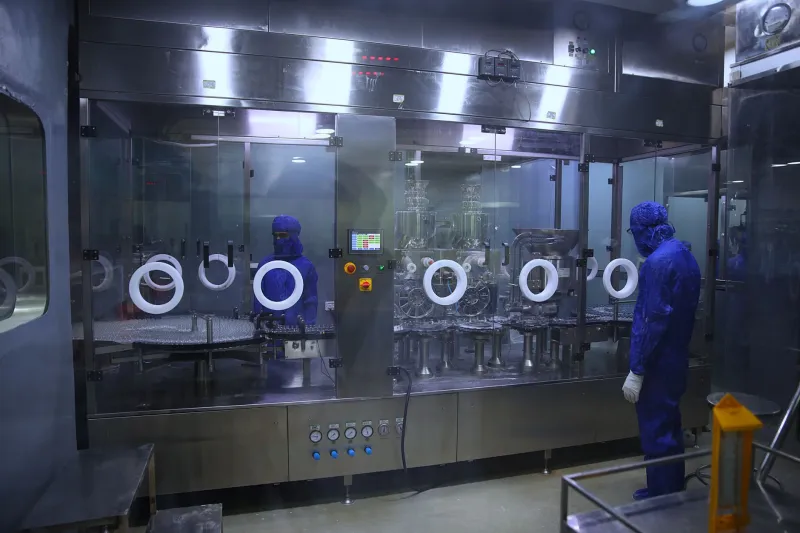
One of the most clinically significant concerns associated with compounded medications is potency inconsistency. In a commercial manufacturing environment, strict quality controls—including validated mixing processes, automated dosing equipment, and end-product testing—are designed to ensure that every unit of a drug contains precisely the labeled amount of active ingredient. Compounding pharmacies, particularly smaller 503A operations, may lack equivalent verification infrastructure.
Research examining compounded preparations has documented cases in which the actual active ingredient concentration deviated substantially from the labeled dose. A 2013 FDA sampling study found that approximately one-third of compounded drug samples tested failed one or more quality standards, with potency deviations representing a primary failure category. For medications with a narrow therapeutic index—drugs in which the difference between a therapeutic dose and a toxic one is small—such variability is not merely a technical concern. It is a direct patient safety hazard.
Patients transitioning from a commercially manufactured drug to a compounded equivalent may therefore be receiving a meaningfully different dose than they assume, with consequences that can range from subtherapeutic response to inadvertent overdose.
Contamination and Sterility: A Recurring Public Health Problem
The compounding pharmacy sector has been associated with several high-profile contamination events that resulted in serious patient harm. The most consequential of these occurred in 2012, when contaminated injectable steroids produced by a Massachusetts compounding facility were linked to a fungal meningitis outbreak that caused hundreds of infections and dozens of deaths across multiple states. The event prompted congressional action and the passage of the Drug Quality and Security Act of 2013, which established the 503B outsourcing facility framework.
Despite legislative reforms, contamination risks have not been eliminated. FDA inspection records continue to document sterility failures, particulate contamination, and inadequate environmental controls at compounding facilities. For patients receiving compounded injectable, ophthalmic, or other sterile preparations, these risks carry direct clinical relevance. Unlike an oral medication that passes through the gastrointestinal tract, a contaminated injectable preparation bypasses the body's primary physical defenses entirely.
Undocumented Side Effects and the Limits of Available Safety Data
When a patient experiences an adverse reaction to an FDA-approved drug, that event can be reported to the FDA's MedWatch system and ultimately contributes to the drug's evolving safety profile. The pharmacovigilance infrastructure that supports commercial medications—clinical trial data, post-market surveillance, mandatory adverse event reporting for manufacturers—does not exist in equivalent form for compounded preparations.
This creates a knowledge gap with direct implications for clinical decision-making. Inactive ingredients, also known as excipients, differ between compounded and commercial formulations and are not pharmacologically inert in all patients. Preservatives, fillers, binding agents, and flavoring compounds used in compounded preparations can provoke allergic responses, alter drug absorption, or interact with other medications in ways that are not well-characterized in the available literature. Patients with sensitivities to specific excipients may not know they are present, and prescribers may not think to inquire.
Furthermore, when a compounding pharmacy modifies an existing drug's delivery mechanism—converting an oral formulation to a transdermal cream, for example—the pharmacokinetic behavior of the drug may change substantially. Absorption rates, peak plasma concentrations, and elimination half-lives can all differ from what clinical trial data for the original formulation would predict, yet there may be no validated safety data for the modified form.
What Patients Should Ask Before Accepting a Compounded Prescription
The existence of regulatory gaps does not mean that compounded medications are inherently unsafe or that patients should refuse them categorically. For individuals with documented allergies to commercial drug ingredients, rare conditions requiring non-standard dosing, or genuine access needs related to discontinued formulations, compounding may represent a clinically appropriate and well-supervised option.
However, informed consent requires that patients understand the safety tradeoffs involved. Before accepting a compounded prescription, patients are well-positioned to ask their prescriber whether an FDA-approved alternative exists and why the compounded formulation is clinically preferable. Patients may also inquire whether the compounding pharmacy is a 503B outsourcing facility subject to federal oversight, whether the pharmacy conducts end-product potency and sterility testing, and whether the pharmacist can provide a certificate of analysis documenting the preparation's composition.
State pharmacy boards maintain licensure records and, in some states, inspection histories for compounding facilities. The FDA also maintains a list of registered 503B outsourcing facilities on its website, which can be used to verify a pharmacy's regulatory status.
A Regulatory Framework Still Catching Up
The compounding pharmacy industry serves a legitimate clinical function, and the patients who rely on it often have few alternatives. But the safety infrastructure surrounding compounded medications remains meaningfully less robust than the standards that govern commercially manufactured drugs. Potency variability, contamination risk, and the absence of systematic adverse event data are not hypothetical concerns—they are documented features of a regulatory environment that has historically prioritized access over verification.
For patients navigating this landscape, the most protective posture is an informed one. Knowing what questions to ask, understanding the regulatory distinction between 503A and 503B facilities, and maintaining open communication with both prescribers and pharmacists can meaningfully reduce—though not eliminate—the safety uncertainties that accompany customized pharmaceutical preparations.